A $400 Watch Is Selling for $900 on StockX. Audemars Piguet Says That’s Fine.
A $400 Watch Is Selling for $900 on StockX. Audemars Piguet Says That’s Fine.
Luxury | May 17, 2026
Sometime before dawn on Saturday, May 16, a person in a lawn chair outside the Times Square Swatch boutique was selling their spot in line for $600. In Tokyo’s Ginza district, more than 300 people had queued overnight. In Houston, campers set up outside the Galleria. By the time boutiques opened for business, many had sold out within hours.
The object of desire was the Royal Pop, a collection of eight pocket watches retailing between $400 and $420. By Saturday afternoon, individual pieces were trading on StockX for around $905. The complete set of eight, which retailed at roughly $3,280, had already sold on the platform for $8,410 before the official launch.
The collaboration between Swatch and Audemars Piguet is the most anticipated watch drop of 2026 and, depending on who you ask, either a brilliant democratization of luxury or a carefully engineered scarcity play dressed in Pop Art colors.
The Watch
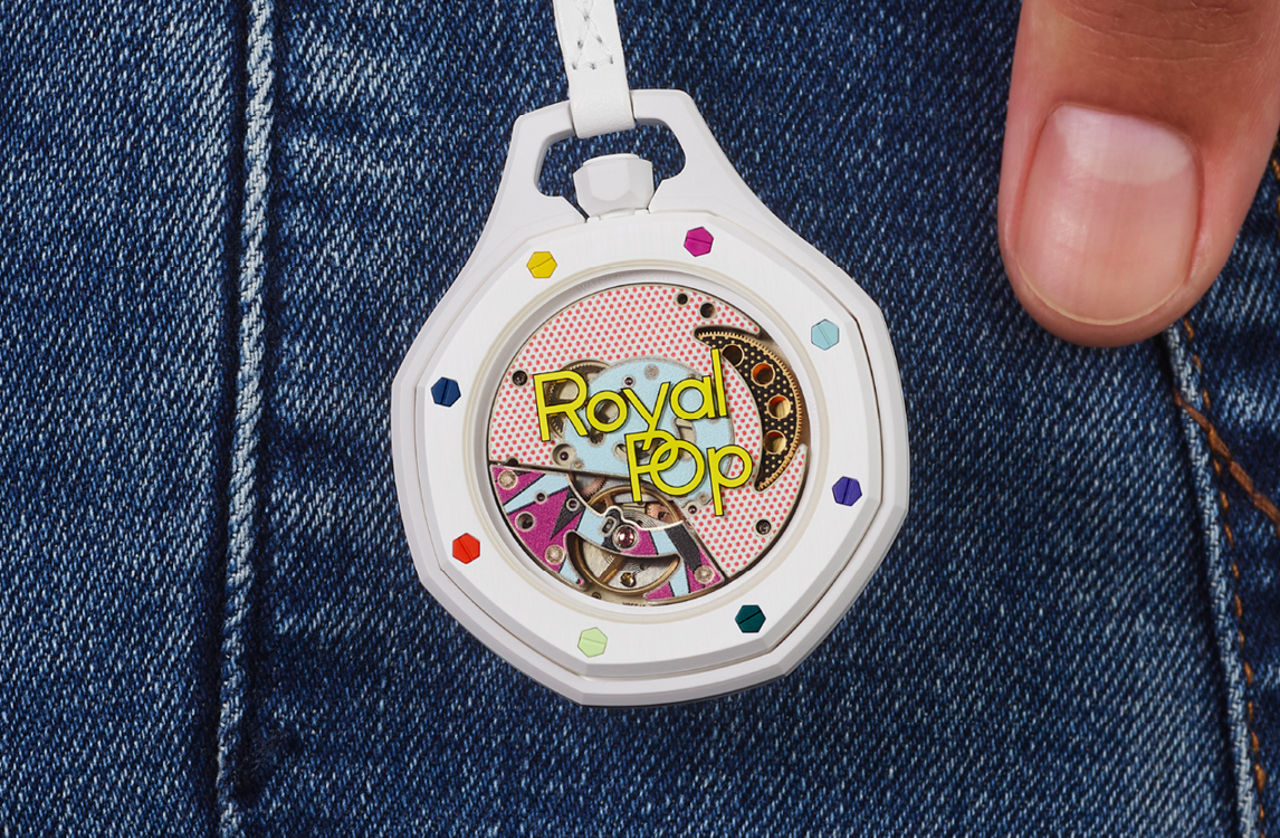
The Royal Pop takes its visual inspiration from the Audemars Piguet Royal Oak, the octagonal steel sports watch that AP released in 1972 and that has since become one of the most imitated silhouettes in watchmaking. Where the Royal Oak starts at around $25,000, the Royal Pop starts at $400 and is made of bioceramic, the proprietary blend of ceramic powder and bio-sourced plastic that Swatch has used for its MoonSwatch collaboration with Omega.
The collection comes in two case styles, Lépine (open-face) and Savonnette (hunter case with hinged cover), and runs on a hand-wound version of Swatch’s SISTEM51 movement, the modular automatic caliber that the company designed specifically to be assembled by machine. Each watch comes with a removable strap that lets you wear it on the wrist, around the neck, in a pocket, or clipped to a bag.
Audemars Piguet says 100% of its proceeds will fund a watchmaking apprenticeship initiative focused on preserving rare horological skills. The luxury market’s habit of attaching philanthropic riders to commercial launches is well established, but the program appears to be real: AP has been running similar training programs quietly for several years.
Why This One Hit Differently
Swatch has done this before. The MoonSwatch, launched in 2022 in partnership with fellow Swatch Group brand Omega, triggered similar queues and resale multiples. But the Royal Pop carries a structural wrinkle that makes it genuinely novel: Audemars Piguet is an independent company, not part of the Swatch Group. This is the first time Swatch has executed a luxury collaboration with a brand it does not own.
The trademark for Royal Pop was filed in June 2024, meaning the two companies spent close to two years in development before the announcement. That timeline, and the level of polish in the final product, suggests this was not an opportunistic extension of the MoonSwatch model but a deliberate, separately negotiated creative project.
The design details reflect that care. The AP octagonal case geometry has been faithfully rendered in Swatch’s materials. The Pop Art dials, each unique across the eight pieces, are not simply colored faces but illustrated compositions that hold up under close examination. Collectors who have spent time with the watches in person report that the case finishing, for a $400 object, is unexpectedly serious.
The Resale Problem and Why It Is Not Going Away
The secondary market behavior around limited luxury collaborations is now so predictable that it functions almost like a feature of the launch strategy. Long queues and instant sellouts generate media coverage. Media coverage drives demand for the secondary market. Secondary market prices confirm the original desirability to people who missed the launch. The cycle sustains itself.
Whether that is good for the watch industry is a genuinely contested question among collectors. The argument against: it prices out genuine enthusiasts in favor of professional resellers who camp in line as a business. The argument for: it introduces a generation of younger buyers to AP’s design vocabulary at a price point that would otherwise be completely inaccessible, and some percentage of them will eventually buy the real thing.
Audemars Piguet’s willingness to attach its name and octagonal case to a $400 bioceramic pocket watch suggests the brand believes the second argument. For a company whose cheapest watch costs roughly 60 times more than the Royal Pop, the math only makes sense if the collaboration is building future customers rather than diluting current ones.
The resale prices suggest the market is, for now, in agreement.
See the interactive price breakdown below.
Sources: WatchTime | Complex | Helvetus | Audemars Piguet
