Nvidia Posts Record $81.6 Billion Quarter as Jensen Huang Says AI Demand Has “Gone Parabolic”
Tech & Finance | May 21, 2026
Nvidia Q1 FY2027 earnings, reported after market close on Wednesday, came in at $81.6 billion in revenue, up 85 percent from the same period a year ago and 20 percent from the prior quarter, smashing Wall Street’s estimate of roughly $74 billion. The result marks the company’s highest-ever quarterly revenue and extends what is now a two-year run of results that have consistently exceeded even the most bullish forecasts.
CEO Jensen Huang said simply: “Demand has gone parabolic.”
Data Center Dominates Nvidia Q1 FY2027 Earnings
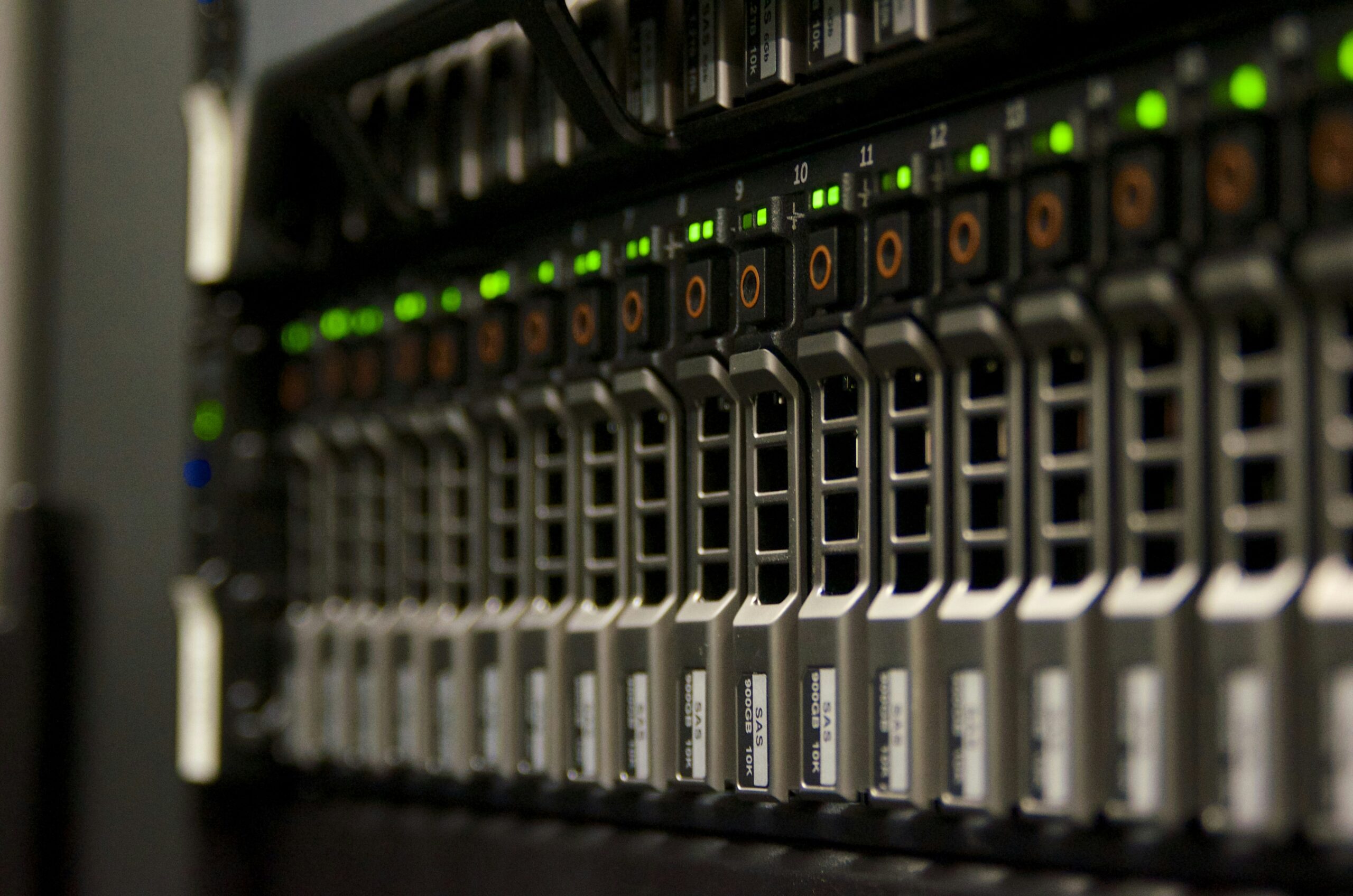
The data center division, which sells the chips and systems that power large-scale AI training and inference workloads, generated $75.2 billion in revenue, up 92 percent year-on-year and accounting for 92 cents of every dollar Nvidia earned in the quarter. That figure alone is larger than the entire company’s annual revenue as recently as 2023.
Huang framed the growth as structural, not cyclical. “The buildout of AI factories — the largest infrastructure expansion in human history — is accelerating at extraordinary speed,” he said on the earnings call. He added that agentic AI, systems in which models autonomously plan and execute multi-step tasks, is now “doing productive work and generating real value across industries,” and that this shift is driving a new wave of demand distinct from the initial training boom.
Gaming revenue came in at $3.8 billion, broadly flat year-on-year, while the automotive segment contributed $567 million, up 72 percent as automakers deepen their spend on AI-powered driver assistance systems.
The Numbers Behind the Guidance
Nvidia’s gross margin held at 74.9 percent on a GAAP basis, down only marginally from the 75.3 percent reported in Q4 FY2026. The company reported GAAP earnings per diluted share of $2.39, versus $1.26 in Q1 FY2026.
For the second quarter of fiscal 2027, Nvidia guided to revenue of $91 billion, plus or minus 2 percent. That figure is approximately $5 billion above what analysts had pencilled in. If Nvidia hits the midpoint, it will represent the fourth consecutive quarter of sequential double-digit revenue growth.
The board approved an additional $80 billion in share repurchase authorization, bringing the total amount available for buybacks to roughly $85 billion. The quarterly dividend was raised from $0.01 to $0.25 per share, a 25-fold increase that signals management’s confidence in the sustainability of current cash generation.
What Is Fueling the Demand
Huang has been consistent in his explanation of why demand keeps surprising to the upside: the shift from software that retrieves and displays information to software that reasons and acts. “Nvidia is the only platform that runs every frontier AI model,” he said, naming Anthropic, OpenAI, xAI, Meta, and Google’s Gemini as customers whose infrastructure runs on Nvidia silicon.
The transition to agentic systems matters for Nvidia because agents consume far more compute per unit of output than conventional retrieval-based applications. A model answering a search query requires one inference pass. An agent that plans a multi-step task, calls external tools, checks its own outputs, and iterates might require dozens or hundreds of passes to complete a single user request. That multiplier effect directly expands the total addressable market for Nvidia’s data center hardware.
Microsoft’s most recent quarterly filing disclosed capital expenditure of $21.4 billion in a single quarter, primarily for data center buildout. Meta has raised its 2026 capital spending guidance to as high as $145 billion. Google parent Alphabet spent $17.2 billion on capital expenditure in Q1 2026 alone. Nvidia sits at the centre of all of it.
Supply, Competition, and the Questions That Remain
Nvidia’s dominance is not without challengers. AMD has been gaining ground in inference workloads with its MI300X and MI400 series accelerators. Intel’s Gaudi 3 continues to find limited commercial traction but is being actively evaluated at several hyperscalers as a cost-reduction measure. Custom silicon efforts at Google (TPUs), Amazon (Trainium), and Meta (MTIA) are all maturing, and each of those companies has signalled intent to rely on in-house chips for a larger share of their workloads over the next two to three years.
Huang acknowledged the competitive landscape without conceding ground. The CUDA software ecosystem, which ties developers to Nvidia hardware through a decade of optimised libraries and tooling, remains the primary moat. Switching costs are not purely financial; retraining engineering teams and rewriting production pipelines on alternative platforms takes time that hyperscalers competing fiercely for AI capability tend not to want to spend.
Supply constraints also remain a background risk. Nvidia manufactures its leading-edge chips at TSMC, where advanced packaging capacity is scarce. Samsung’s chip manufacturing workers are set to begin a strike on May 21 that could affect memory component supply chains, a secondary but potentially significant input cost for data centre operators.
Nvidia’s share price rose approximately 5 percent in after-hours trading following the report, adding roughly $150 billion to the company’s market capitalisation in a single session.
Sources: NVIDIA Q1 FY2027 Earnings Press Release — SEC EDGAR | NVIDIA Q1 FY2027 Revenue Hits Record $81.6 Billion — Blockonomi | Nvidia NVDA Q1 2027 Earnings Live Updates — CNBC | Nvidia Earnings Live Updates May 2026 — Kiplinger